
Asian Games 2026 cricket Gold medal
India defended their title against Pakistan — why a strong campaign should not be confused with an effortless gold.
 By Thiyag
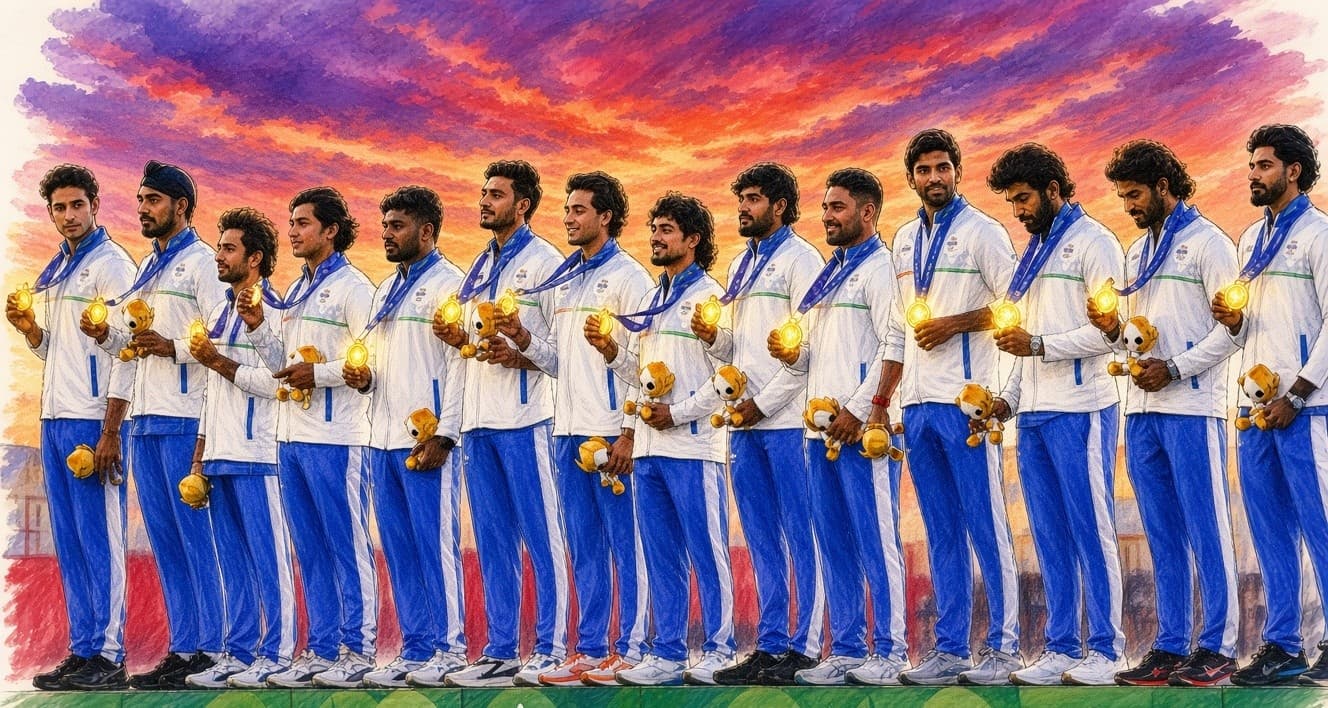
CricBubble’s existing editorial illustration.
Gold medals can make a tournament look simpler in retrospect. The winners stand together, the scoreline becomes a headline and the difficult passages disappear into a satisfying ending. India’s men deserved their Asian Games cricket title in Japan. But reducing the achievement to an easy medal would miss both the quality of their batting and the challenge Pakistan presented in the final.
On 3 October 2026, India made 211 for six at Korogi Athletic Park in Nisshin and restricted Pakistan to 192 for six, winning by 19 runs. It was a successful title defence under Shreyas Iyer and completed a cricket gold double after the Indian women’s triumph. The result reflected a stronger team performance, but it still had to be assembled through distinct contributions.
A fast start is only the first part of the job
Abhishek Sharma scored 61 from 28 balls, giving India an aggressive opening contribution. The important word is contribution: even an explosive innings does not remove the need for a productive middle and finish. T20 batting is a relay of responsibilities. A side that begins quickly can still surrender its advantage if the next batters cannot respond to wickets or changes in the bowling.
The final in numbers
- ◆India 211/6 beat Pakistan 192/6 by 19 runs.
- ◆Abhishek Sharma: 61 from 28 balls.
- ◆Tilak Varma: 51 not out from 22 balls.
- ◆Hasan Nawaz: 96 in Pakistan’s chase.
- ◆India retained the men’s title and completed a men’s and women’s gold double.
That makes Tilak Varma’s unbeaten 51 from 22 deliveries central to the story. An innings ending strongly places a different burden on the chasing side from one that merely began strongly. India had players influencing opposite ends of the innings, and that spread of work mattered more than any claim that one batter had won the final alone. The total was the output of a sequence, not simply one memorable burst.
Pakistan made the defence a real examination
Hasan Nawaz’s 96 kept Pakistan interested even after an early stumble. India had put a demanding target on the board, yet the final still required their bowlers to complete the work. A defending team cannot assume that a high required rate will take wickets for it. One settled batter can change the feeling of a chase quickly, particularly when boundary opportunities remain.
Nawaz supplied that resistance. His innings is a useful corrective to the suggestion that the contest was a formality. Recognising an opponent’s contribution does not diminish India’s medal. It explains the conditions under which the medal was won. A side is tested when a dangerous batter stays involved, and maintaining enough control to finish ahead is itself a valuable skill.
Why the medal means more than the margin
A bilateral match offers another fixture in which to repair mistakes. A gold-medal final does not. That changes the value of decision-making: a captain must manage the bowlers available on the day, batters must judge the situation in front of them and fielders must keep their concentration. Familiarity with high-profile cricket can help, but it cannot substitute for executing those jobs in the actual contest.
The 19-run margin therefore tells only part of the story. It says India finished with room to spare on the scoreboard. It does not tell us that every phase was comfortable or every decision obvious. CricBubble’s reading is that India converted their advantages well. The useful lesson is about turning resources into a completed performance, rather than treating superior resources as a guarantee.
Keep both gold medals in the picture
India’s women also won the cricket title, making the overall achievement a double. That deserves space in any account of the campaign rather than being reduced to an incidental line after the men’s result. Separate teams had to meet their own competitive demands. Their medals share a national celebration, but the work behind them belongs to the players who performed in each event.
For supporters, a team medal also broadens the idea of contribution. The most visible performances are easy to identify, but a squad’s success depends on preparation and clarity of roles across the group. A player does not need the largest individual score to have served the winning plan. Celebrating the team properly means leaving room for those differences, without inventing influence the scorecard cannot establish.
Celebrate the achievement; keep asking questions
The right response to a gold medal is pride accompanied by perspective. It is reasonable to expect a strong Indian side to contend in this competition. Expectation, however, is a forecast rather than a result. Someone still has to score the runs, hold the chances and defend the target. The final supplied enough resistance to make that distinction worth remembering.
India left with the title because the innings had a powerful beginning and finish, and the defence remained good enough when Pakistan found a major individual response. That is a stronger story than effortless superiority. It gives the winners credit for their cricket and the opponents credit for making them play it. Gold is worth celebrating without pretending the journey required no work.
Enjoyed this CricBubble take?